Journal
In 2025, Negro turned ten.
Project: Negro
Role: Brand Design & Creative Direction
Negro was one of the first specialty coffee bars in Buenos Aires. Over time, the brand expanded across the city and began roasting its own coffee under the name Fuego Tostadores.
After a decade, many of the visual decisions that once helped define the category started to feel familiar. Specialty coffee had developed a highly recognizable language: warm spaces, illustrated systems, a friendly tone, and a handcrafted aesthetic.
The question that emerged was this:
How do you build a brand that feels confident, cultural, and contemporary without losing warmth or falling into generic codes?
At first, we looked outward.
Berlin kept showing up in the references. Graphic systems with more structure, cultural brands, and cafés that communicated confidence through typography, contrast, and composition.
The first explorations relied on abstract forms, simple geometries, and systems built through repetition. The identity was beginning to feel clearer, more focused, more assured.
But something still felt off.


We decided to pause that direction and start again from a different place:
Historic cafés and certain symbols of Argentine culture entered the process naturally. We began paying attention to references capable of conveying history, identity, and cultural belonging.
We explored the visual culture of Buenos Aires, and that search eventually led us to fileteado.
We ran several experiments to translate that language into a contemporary system, but once brought into a digital environment, it lost much of what makes it meaningful: the hand, the craft, the material presence.

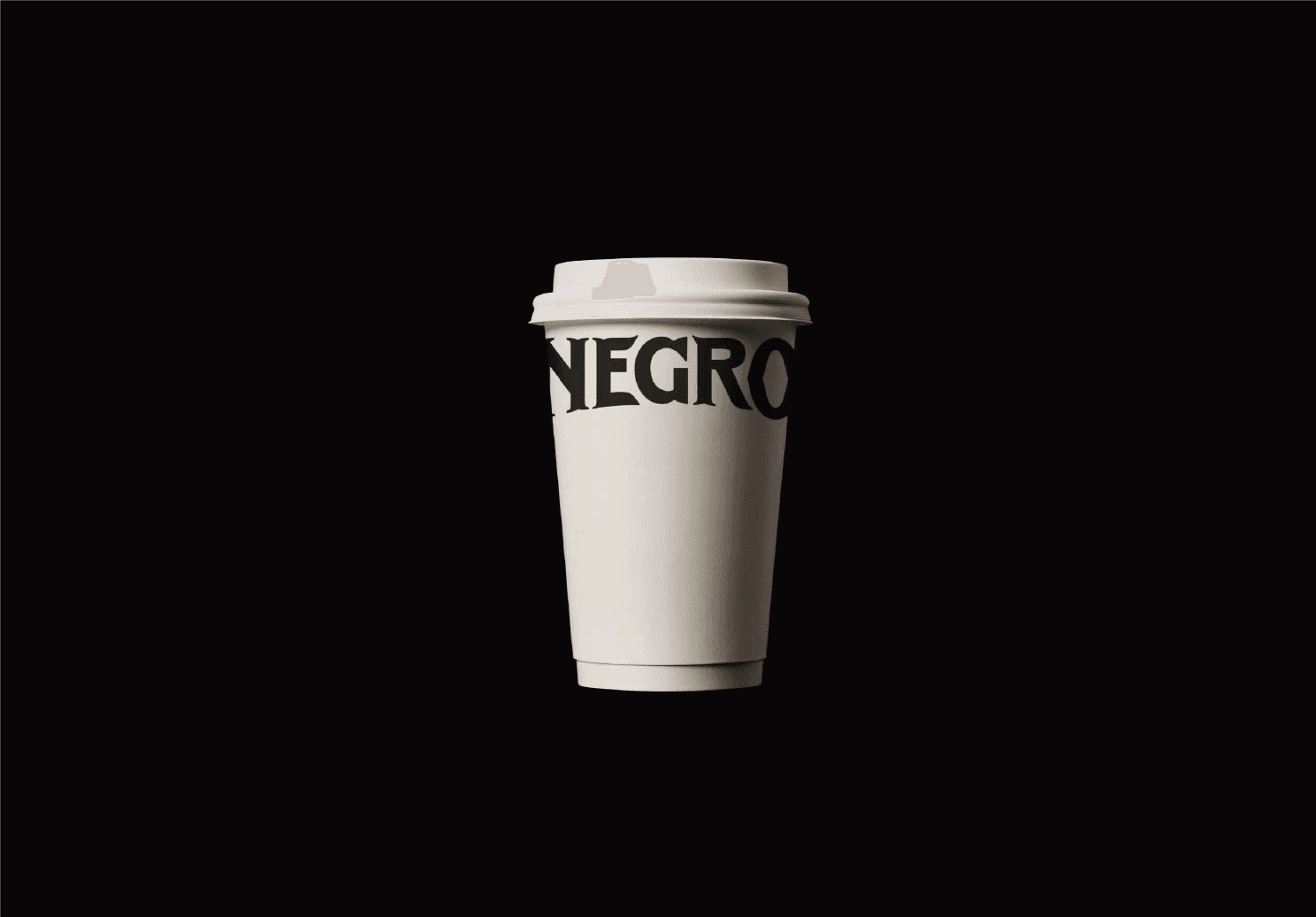
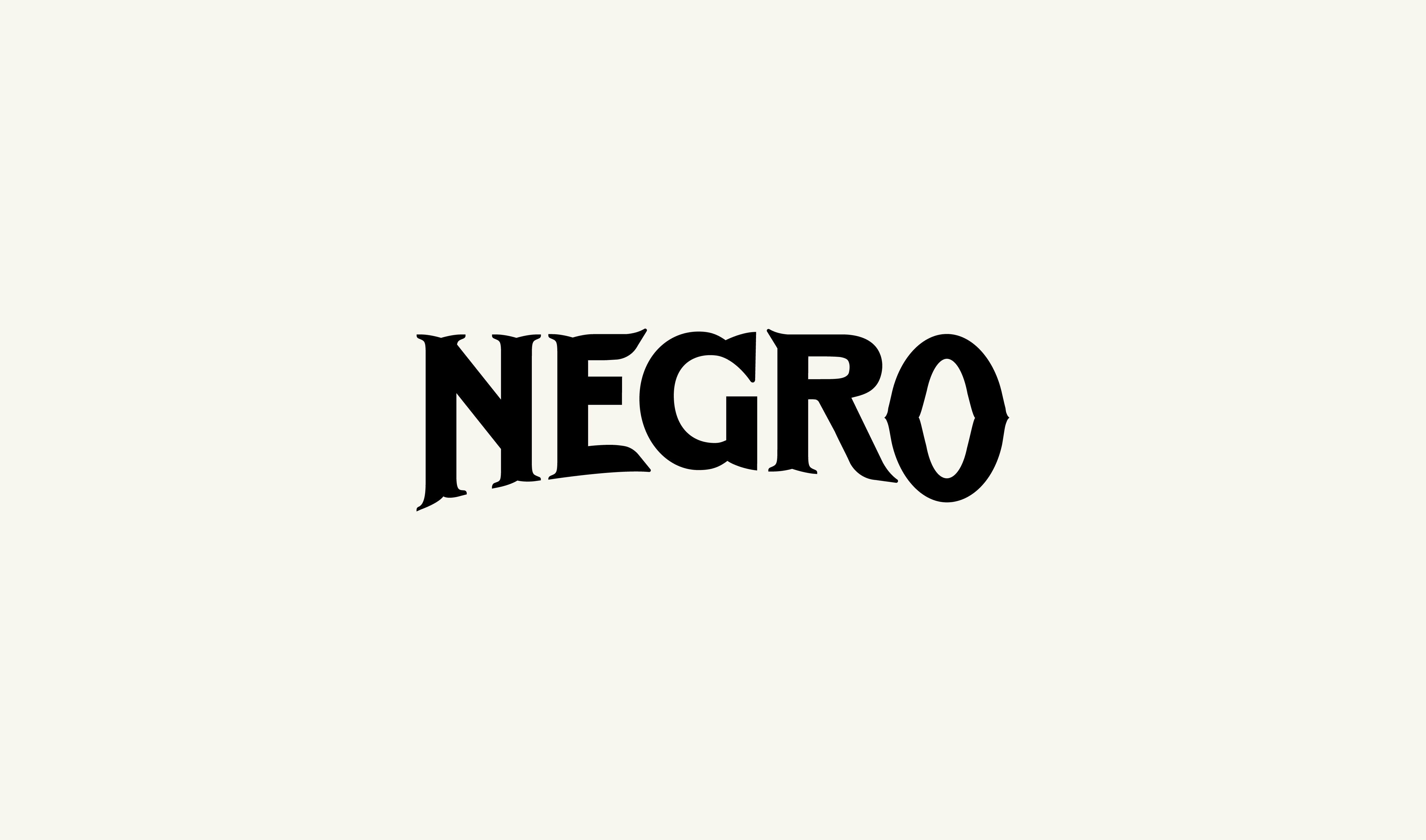
Rather than replicating it, we chose to be influenced by it. The typography, the colour palette, and the logo reduction began to draw from those references without quoting them literally.
The identity found its place when the cultural references stopped being explicit and began living through smaller gestures.
Over time, that direction expanded beyond the graphic system: into architecture, materials, curation, and physical spaces.
A few months ago, Negro Hollywood opened with the participation of Buenos Aires–based designers. Then came Negro Kiosco, where fileteado returns in its most authentic form: hand-painted by a local artist on a former newspaper stand transformed into a walk-up café.
The authority Negro was looking for didn't come from a brand that was louder, more complex, or more explicit.
It started to emerge when the identity found a clearer and more honest way to represent what the brand already was: a café with history, discernment, and a much deeper cultural relationship with its city.